
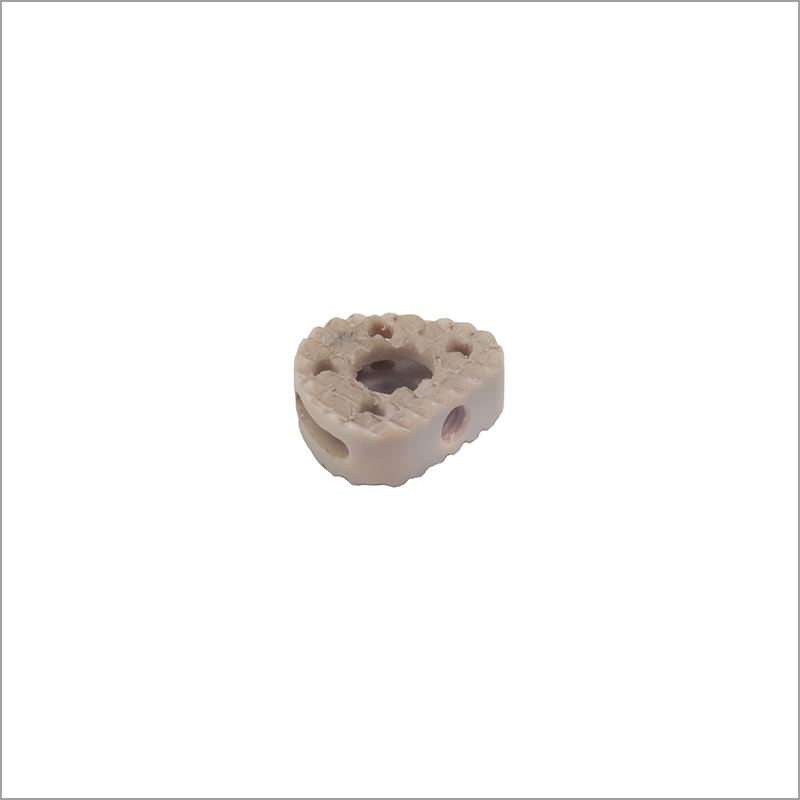


ANTERIOR CERVICAL FUSION CAGE ()
The Anterior Cervical Fusion Cage made of (Polyetheretherketone) is a specialized orthopedic implant used in anterior cervical spine surgeries to facilitate fusion and stabilization of the cervical vertebrae. Here's an overview of its specifications and uses:
Specification
- Material: The Anterior Cervical Fusion Cage made of is crafted from a high-performance thermoplastic polymer known as . is chosen for its biocompatibility, radiolucency, and mechanical properties that resemble those of bone.
- Design: The cage is designed specifically for anterior cervical spine applications. It is available in various sizes and shapes to accommodate different patient anatomies and surgical requirements. The design typically includes features such as teeth or ridges to prevent migration and improve stability within the disc space.
- Surface Texture: The surface of the cage may be treated or coated to promote bone growth and fusion. This can include features such as roughened surfaces, porous coatings, or hydroxyapatite coatings that enhance osseointegration.
- Graft Windows: The Anterior Cervical Fusion Cage made of often includes windows or perforations along the surface to allow for the placement of bone graft material. These graft windows facilitate the incorporation of bone graft into the intervertebral space, promoting fusion between adjacent cervical vertebrae.
Uses
- Spinal Fusion Surgery: The primary use of the Anterior Cervical Fusion Cage made of is in anterior cervical spine fusion surgeries. It helps restore and maintain disc height, stabilize the spine, and promote fusion between adjacent cervical vertebrae. The cage serves as a spacer to facilitate bone growth and fusion across the disc space.
- Correction of Spinal Deformities: The implant can be used to correct various spinal deformities, including cervical disc degeneration, herniation, or spondylolisthesis. By providing structural support and realignment of the cervical spine, the cage helps alleviate symptoms and improve spinal stability.
- Interbody Fusion: The Anterior Cervical Fusion Cage made of facilitates interbody fusion by providing a stable platform for the placement of bone graft material. It allows for the ingrowth of bone tissue across the disc space, leading to fusion between adjacent cervical vertebrae and stabilization of the spinal segment.
- Minimally Invasive Surgery: The cage is suitable for use in minimally invasive anterior cervical spine surgeries, where access to the surgical site is limited. Its radiolucency allows for clear visualization on imaging studies post-surgery. Additionally, its design allows for easier insertion through smaller incisions while still providing adequate stability and fusion promotion.
In summary, the Anterior Cervical Fusion Cage made of is a specialized implant designed for anterior cervical spine fusion surgeries. It offers customization, stability, and fusion-promoting properties essential for successful outcomes in cervical spine surgery.