
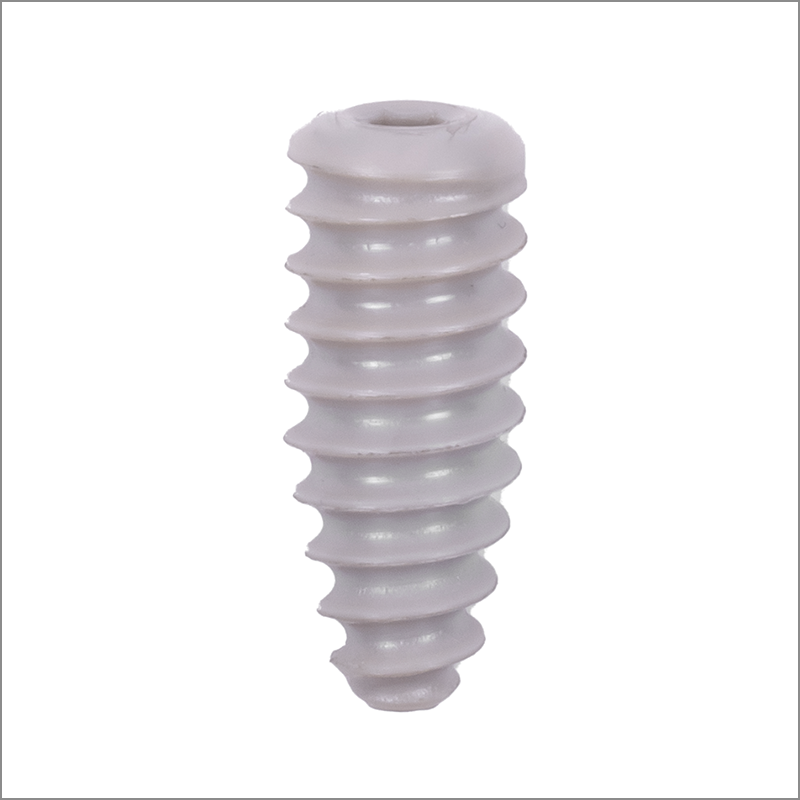


10.0MM ACL INTERFERENCE SCREW,CANNULATED
The 10.0mm ACL (Anterior Cruciate Ligament) interference screw, cannulated (Polyether ether ketone), is a specialized orthopedic implant used in anterior cruciate ligament reconstruction surgeries. Here's a breakdown of its specifications and uses:
Specification
- Size: The size specification denotes the diameter of the screw, with a diameter of 10.0mm. This dimension is crucial for ensuring proper fit and stability within the bone tunnel.
- Material: The screw is made of cannulated , a biocompatible polymer known for its strength, durability, and compatibility with MRI imaging, making it an ideal choice for orthopedic implants.
- Design: The screw features a cannulated design, meaning it has a hollow central channel that allows for the passage of a guide pin during insertion. This design aids in precise placement and fixation of the graft during ACL reconstruction surgery.
Uses
- ACL Reconstruction: The 10.0mm interference screw is primarily used in ACL reconstruction surgeries. During this procedure, the torn ACL is replaced with a graft, typically harvested from the patient's hamstring tendon or patellar tendon. The interference screw is used to secure the graft in place within the bone tunnels drilled in the femur and tibia.
- Biomechanical Stability: The screw provides biomechanical stability by compressing the graft against the bone tunnel walls, promoting graft incorporation and facilitating the healing process. This compression helps to prevent graft laxity and maintain knee stability.
- Cannulated Design: The cannulated design allows for precise placement of the screw over a guide pin, which is inserted through the center of the graft. This facilitates accurate positioning of the graft and screw within the bone tunnels, optimizing fixation and enhancing surgical outcomes.
- Material Benefits: Cannulated screws offer several advantages, including biocompatibility, radiolucency (allowing for clear imaging during follow-up), and resistance to corrosion and wear. Additionally, 's elastic modulus is closer to that of bone compared to metallic screws, potentially reducing stress shielding and improving long-term outcomes.
- Surgical Technique: Surgeons use specialized instruments and techniques to prepare the bone tunnels and insert the interference screw during ACL reconstruction surgery. Careful attention to detail is essential to ensure proper graft tensioning and fixation, ultimately leading to successful outcomes and patient rehabilitation.
In summary, the 10.0mm ACL interference screw, cannulated , is a crucial implant used in ACL reconstruction surgeries to provide stable fixation of the graft within the bone tunnels, promoting graft healing and restoring knee stability. Its cannulated design and material offer several advantages, making it a popular choice for orthopedic surgeons performing ACL reconstruction procedures.