
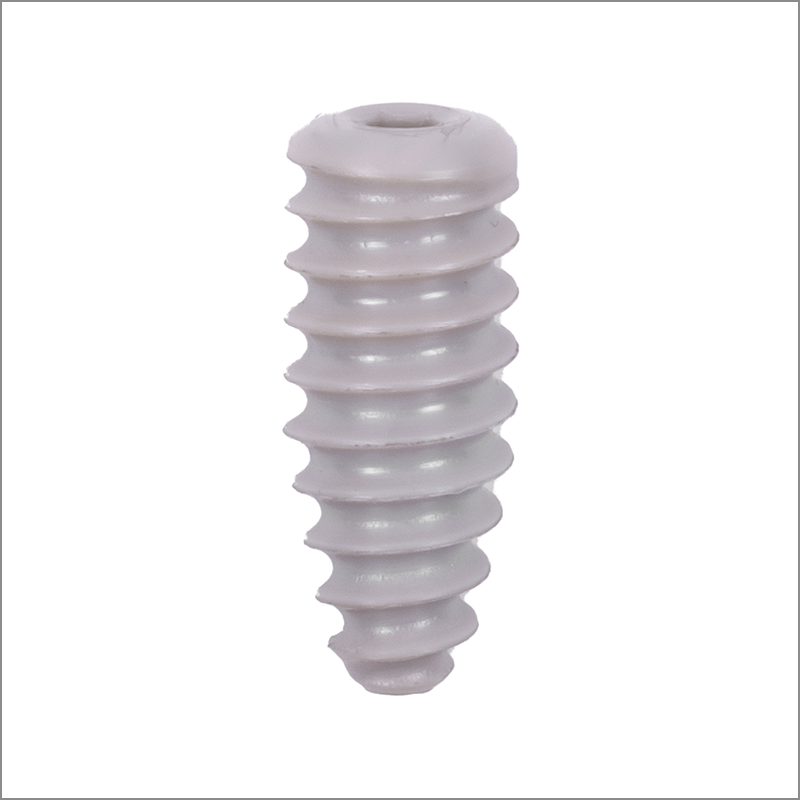


7.0MM ACL INTERFERENCE SCREW,CANNULATED
Interference screws are orthopedic implants used primarily in anterior cruciate ligament (ACL) reconstruction surgeries to fix grafts in bone tunnels. Here's a breakdown of the specification and uses of a 7.0mm ACL interference screw, cannulated with material:
Specification
- Size: The "7.0mm" indicates the diameter of the screw. The length may vary based on surgical requirements and the depth of the bone tunnel.
- Material: The screw is made of polyetheretherketone (), a biocompatible polymer known for its strength, durability, and radiolucency. The cannulated design means it has a hollow center, allowing for insertion over a guide wire.
- Design: The interference screw has a threaded design, allowing it to be securely inserted into the bone tunnel to hold the graft in place. The cannulation allows for insertion with a guide wire, facilitating accurate placement.
- Surgical Technique: Surgeons use specialized instruments to prepare the bone tunnels and guide the insertion of the interference screw. The screw is inserted over a guide wire into the bone tunnel and tightened to achieve compression and fixation of the graft.
- Biomechanical Considerations: The design and material of the interference screw are crucial for providing adequate fixation strength while minimizing the risk of graft slippage or failure. material offers favorable biomechanical properties similar to bone and reduces the risk of adverse reactions or interference with imaging techniques like MRI.
- Postoperative Care: Patients undergoing ACL reconstruction or other surgeries involving interference screws require postoperative care, including rehabilitation and physical therapy, to promote graft healing, restore knee function, and prevent complications such as graft failure or infection.
Uses
- ACL Reconstruction: In ACL reconstruction surgery, a graft (often a tendon, such as the hamstring or patellar tendon) is passed through bone tunnels in the femur and tibia to replace the torn ACL. The interference screw is then used to fix the graft within the bone tunnel, providing stability and promoting graft integration.
- Other Ligament Reconstructions: Interference screws may also be used in other ligament reconstruction surgeries, such as posterior cruciate ligament (PCL) or medial collateral ligament (MCL) reconstruction, where graft fixation is required.
- Bone-to-Bone Fixation: Apart from ligament reconstruction, interference screws can be used for bone-to-bone fixation in various orthopedic procedures, such as fixation of osteochondral grafts or bony avulsion fractures.
- Biomechanical Studies: Interference screws are also used in biomechanical studies and research to evaluate the mechanical properties and performance of different graft fixation techniques.
In summary, the 7.0mm ACL interference screw, cannulated with material, is a specialized orthopedic implant used in ACL reconstruction and other ligament reconstruction surgeries to provide secure fixation of grafts within bone tunnels, promoting graft integration and knee stability.